










Matrix Items vs. Parent-Child Setup: Which Is Best for eCommerce SEO?
One of the most consequential SEO decisions for eCommerce merchants is how to structure product pages when products have multiple variations. Size, color, material, fit,
Paid Media Campaigns
Audience and Channel Research: Google, LinkedIn, Facebook, Twitter, Instagram
Retargeting
Reach and recover those users that come to your website and fall off
Traffic Acquisition
Expand your audience with a multichannel strategy
Paid Media Campaigns
Audience and Channel Research: Google, LinkedIn, Facebook, Twitter, Instagram
Retargeting
Reach and recover those users that come to your website and fall off
Traffic Acquisition
Expand your audience with a multichannel strategy



With Paid Media, advertisers pay only when their ads are clicked. Although not all advertising models in major platforms are based on paid clicks, most online advertising is referred to as PPC (Pay-Per-Click).
It’s a great way of obtaining qualified visits to your NetSuite eCommerce, rather than just paying for advertising space!
Advertising campaigns can be set up and implemented in a couple of days or even hours!
Unlike Social Media or SEO, which require more time to gain momentum.
Paid Media shows you what users do after clicking on one of your ads.
It’s possible to know how many sales, how much revenue, and the return on investment (ROI) of each campaign.
Ads are shown to specific audiences based on user location, demographics, interests, and behaviors.
So each ad can be tailored to its audience’s characteristics.
Advertising campaigns can be set up and implemented in a couple of days or even hours, unlike Social Media or SEO, which require more time to gain momentum.
PPC show advertisers what users do after clicking on one of their paid ads. It’s possible to know how many sales were driven by advertising, how much revenue, and the return on investment (ROI) of each campaign.
Ads are shown to specific audiences based on user locations, demographics, interests, and behaviors. And each ad can be tailored to its audience’s characteristics.
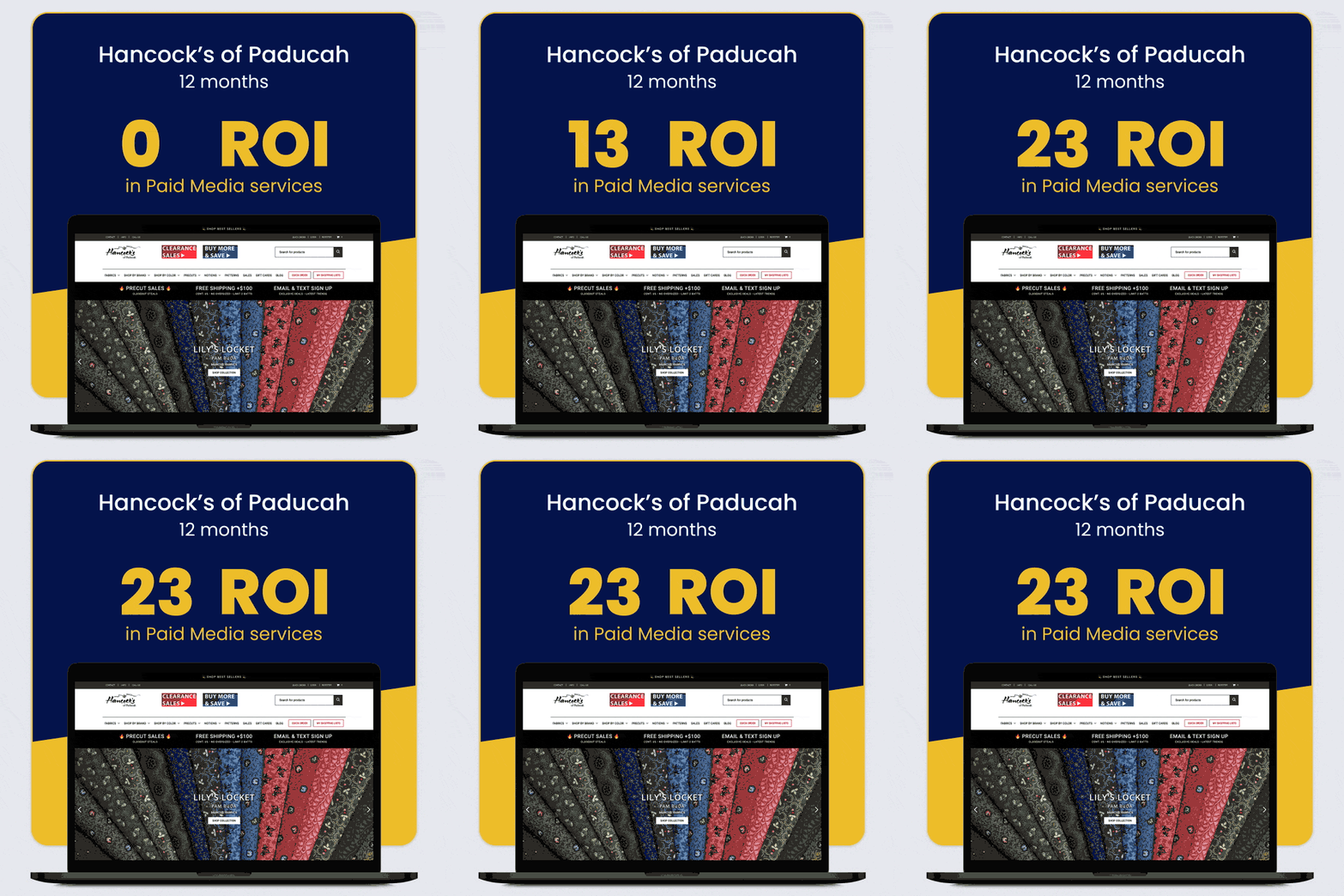
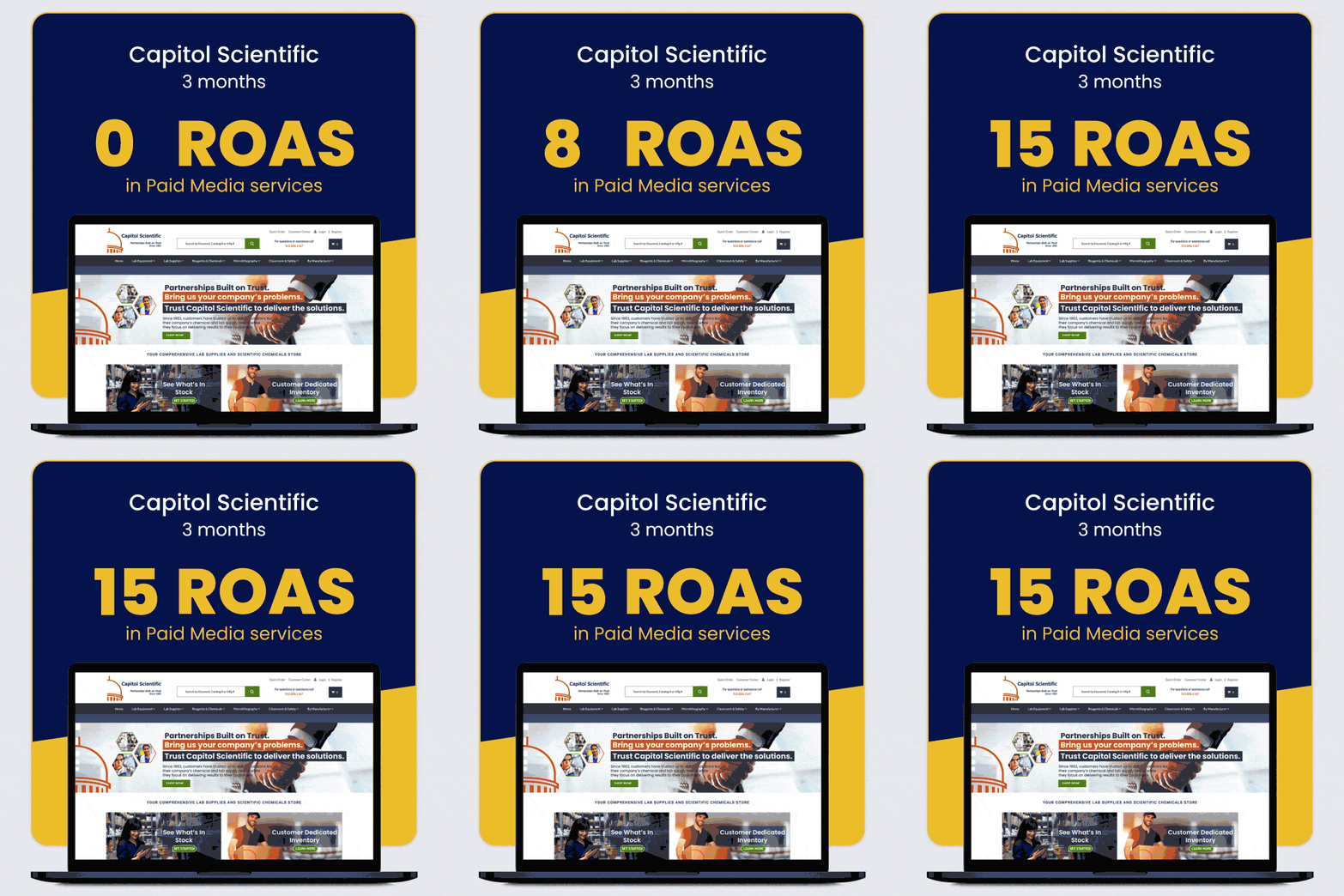

Any kind of business (B2B, B2C), from any niche in any market, and in any part of their lifecycle can benefit from digital advertising. Whether it’s to reach a wider audience or connect on a deeper level with their current customers, digital advertising can help to increase sales and ROI.
PPC Consultant
Paid Media creates great synergy to boost SEO, social media, and email marketing performance, giving you great insight into your product/market fit, target audience, and website functionality, helping you improve the marketing strategy for your NetSuite eCommerce business.
Let’s be real. You will be paying for your ads, so you need someone continuously monitoring that everything — especially ROI — is going well.
Furthermore, Paid Media campaigns require continuous optimizations to improve results taking advantage of their generated data.
A Paid Media expert will create the right targeting for your campaign by combining interests and selecting the right keywords. Also, a PPC expert will know how to integrate a complete funnel strategy, making the most out of your marketing investment.
A Paid Media expert masters all major tools and they are up to date with the latest features. They will also know the newest market trends and which initiatives perform better for a specific industry.
Awareness vs. Performance
Awareness: Build Your Upper Funnel
Performance: Follow Up Through Your Mid and Bottom Funnel
Determining your ad budget for B2B campaigns depends on several factors:
For typical paid media campaigns on platforms like Google, LinkedIn, and Meta, there are no fixed or list prices. Ad costs are usually charged per click or per impression. Therefore, it’s crucial to test your ads, targeting, and platforms to gain insights and make informed decisions. Experience can significantly help in this process.
After gathering some reference data, you can perform Reverse Engineering to determine your budget:
By answering these questions, you can establish a
well-informed budget for your B2B ad campaigns.
Measuring the ROI of B2B paid media campaigns involves tracking the entire journey of the leads generated. Here are the key steps:
Yes, LinkedIn CPC tends to be very expensive, especially for conversion or lead generation campaigns. Here are some strategies to improve CPC:
A strategy we have successfully used with clients facing high CPC on LinkedIn:
Google: For Video, Display, or Demand Gen campaigns, you can set up desktop-only campaigns.
Meta: It’s possible to segment just for desktop, but it will only show ads on Facebook.
LinkedIn: Use the “Member Traits” targeting option to select “Device Preferences” and focus on desktop users.
Yes, especially if your competitors are bidding on your brand’s name. Running a branded campaign helps ensure that your ads appear at the top of search results when users search for your brand, protecting your brand visibility and driving relevant traffic.
It will depend on a lot of factors, but most likely we’d recommend Google Ads.
It is probably the platform to target the lower hanging fruits, as with search ads we can target people already searching for our products or services.
Additionally, Google Ads provides excellent planning tools that offer insights into keyword volumes and costs, helping you plan your campaigns before launching them.
Branded Search: Focus on branded search campaigns to capture interest from users already aware of your brand.
Specific Locations: Target very specific geographic locations relevant to your business.
B2B Segmentations: Utilize B2B-specific audience segmentations to reach your ideal prospects, such as Interests around different Business Services or Business Products.
Ad Scheduling: Schedule ads to run during business days and hours to align with B2B working hours.
Retargeting: Implement retargeting campaigns or higher bidding, to re-engage visitors who have shown interest in your offerings.
Lead Gen Forms: Use lead generation forms to capture contact information directly from the ads.
Test & Optimize: Continuously test and optimize your campaigns to improve performance and ROI.
There is no rule for this, but maybe these time frames can be of reference:
There’s a trade-off between volume and quality. Website Forms tend to drive more qualified leads, and in-platform forms tend to drive more volume.
Finding the right form depends on a variety of circumstances, each company needs to determine what works best for them and the purpose of the lead. So, our recommendation is to always test!
Free Trial / Free Version / Free Interactive Tool
Free Research Reports
Free Educational Resources
Conclusion: The best option depends on your goals, objectives, and your company’s nature and industry. If you’re unsure, you can always test different offerings to see what works best.
One of the most consequential SEO decisions for eCommerce merchants is how to structure product pages when products have multiple variations. Size, color, material, fit,
Email marketing generates an average ROI of $36 to $42 for every dollar spent across all industries, with retail and eCommerce hitting up to $45


Web accessibility is no longer a niche consideration. In 2025, more than 2,000 ADA website accessibility lawsuits were filed in the first six months of